




The lyrical sound of a string instrument fills the room, followed by the soft, melodic notes of a piano. The two instruments sound spellbinding on their own. But put the two sounds together, along with stirring vocals, and you get a song that is just as captivating. It is an awe-inspiring moment, witnessing the steps of a song being made simply with a couple of sounds.
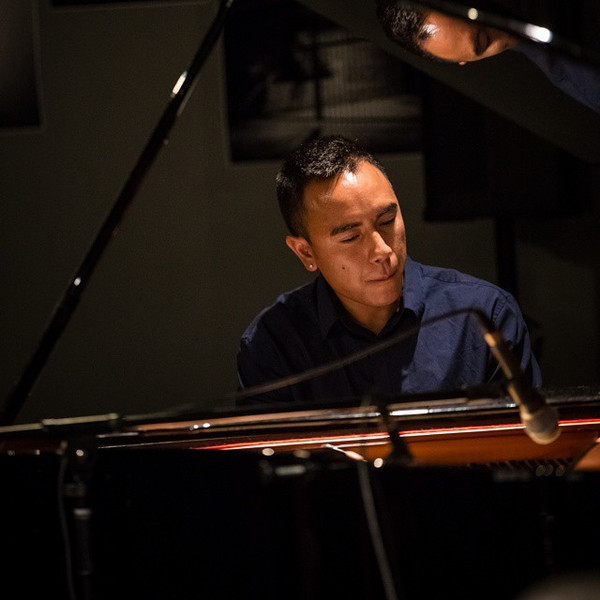
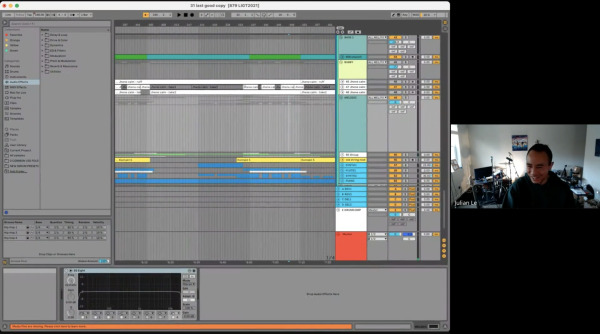
Except this is not a session in a music studio. Instead, it is a shared screen on Google Meet, where musician Julian-Quan Viet Le is showing a sample of Jhene Aiko’s song “Calm and Patient” to members of the Asian Heritage Association (AHA).
AHA hosted a Q and A with Viet-Le, professionally known as Lejkeys, on February 22. Viet-Le is a Grammy-nominated producer who has worked with various artists, including Jhene Aiko and Anderson.Paak. He has also worked on the music for the Disney movie Raya and the Last Dragon. Students had the opportunity to ask Viet-Le questions about his music career, from his producing process to how his heritage influences his artistry.
Viet-Le’s passion for music started from an early age. Both of his parents were musicians, and as a result Lejkeys grew up listening to a lot of traditional Vietnamese and Chinese music and instruments. Viet-Le lived in Vietnam for a year and a half, where his dad introduced him to the Beatles, Charlie Parker, and Miles Davis. Additionally, Viet-Le grew up surrounded by classical music, and while he admits the actual practice was arduous work, classical music was an integral part of his musical journey.
Producing music was not initially on Viet-Le’s radar. After studying piano and music composition in college, Viet-Le went on tour as a pianist. However, while he loved playing the piano, Viet-Le decided that he wanted to explore a wider range of music.
“I think that’s when I started to shift my focus over to music production because in my view I think anything’s possible in music production,” Viet-Le said. “Like if I hear a sound that I want to attempt, I can go for it. Any sound is at my disposal and I can just find a way to get that sound. So I just like the limitless possibilities of music production.”
One of the big artists that Viet-Le frequently collaborates with is singer-songwriter Jhene Aiko. Initially, Viet-Le started as Aiko’s keyboard player, though eventually he became her music director until she found out that he produced music on the side. Soon their working relationship developed into a genuine friendship.
“She’s one of the few artists where it feels like she really cares about her craft,” Viet-Le said. “Like she’s really trying to put music out there that is representative of herself, like she’s telling stories. She’s very involved in everything.”
In terms of his producing process, Viet-Le says it can stem from anything, from a voice memo of someone singing to the sound of birds chirping. To Viet-Le, trusting the process and not being a perfectionist is crucial to getting good results.
“I think being a perfectionist can sometimes be a little destructive in music because music is so subjective,” Viet-Le explained. “I don’t know if there’s really a right or wrong, like if this song is perfect or not.”
Coming from an AAPI background, Viet-Le recognizes the challenges that musicians like him face, particularly in the live instrumentalist scene for backing big artists. However, instead of seeing his background as an obstacle, it presented an opportunity to improve his craft.
“Even though I may be a minority in this particular field, if I get undeniably good to the point where they’re like Oh, okay, yeah, it doesn’t even matter [that he’s Asian] anymore – like I think at some point the skill will overlook anything else,” Viet-Le said. “So you might have to set the bar a little higher, but at the end of the day it is good for you anyways.”
Of course, with the growing presence of AI in the arts, the topic of AI was bound to come up during the Q and A. For Viet-Le, he tends not to experiment too much with AI when it comes to producing music. “I’m still on the fence about it in terms of people using it,” Viet-Le said. “I think it is a good way for people to brainstorm ideas, but at the same time it feels a little funny because it’s ideas that don’t really feel like your own.”
While Viet-Le may not be utilizing AI in his music, he does think that it poses a concern for the ability to think in general. “I don’t think AI is scary but it is getting to the point where people stop learning how to think,” Viet-Le shared. “It just feels a little lazy to me. And I think one of the things that makes us human is our ability to think for ourselves.”
It is no secret that the music industry can be cutthroat and exhausting. However, for Viet-Le, music brings him peace, and his love for music keeps him going amidst the obstacles music may present. To avoid getting caught up in the competitive, stressful nature of music, Viet-Le has found ways to stay grounded, primarily through swimming.
As for younger generations who hope to pursue a path in the music industry, Viet-Le strongly emphasized taking any opportunities you can get and keeping an open mind. He spoke about one of his professors, James Newton, who had a significant influence on Viet-Le at the start of his musical journey.
“He was always just looking out for me,” Viet-Le said. “And even though he was a jazz teacher, he reminded me to keep an open mind about music because sometimes when you study just one genre, it’s really easy to get tunnel vision and just think about that one genre that you’re studying.”
Ultimately for Viet-Le, the accolades and the recognition are simply the bonuses of the job, not necessarily the goal. At the end of the day, Viet-Le likes making music that helps people get through the challenging moments of their life.
“One of the kind of life-changing moments for me was when I actually got a DM from someone that said, “Oh, thank you so much for your music. It actually got me out of suicide,”” Viet-Le said. “So that was huge for me, because at the end of the day I’m really happy I get to do something I love and help people while doing it.”
There are upcoming projects for Viet-Le on the horizon – none that he could share just yet. And the idea of collaborating with bigger artists is an exciting prospect. At the moment, however, improving and developing his craft is the thing that Viet-Le is focused on. “Now I’m just enjoying my life making music,” Viet-Le said simply. “I’m just enjoying growing.”